A Practical Guide To Charging Several Devices From One Travel Charger
A practical step-by-step guide to a practical guide to charging several devices from one travel charger, including preparation, instructions, common issues, tips, and next steps.

A Practical Guide To Charging Several Devices From One Travel Charger
This guide explains how to safely and efficiently charge multiple devices from a single travel charger, covering preparation, step-by-step methods, common pitfalls, and advanced tips to keep your devices powered while on the go.
Fast Answer
- Use a multi-port travel charger with enough total wattage for all devices, and plug devices into the appropriate ports based on their power needs.
- Carry a compact power strip or a charger with multiple USB-C and USB-A ports, and prioritize charging high-demand devices first.
Before You Start
- Check the wattage rating of your travel charger and compare it to the total power draw of the devices you plan to charge, ensuring the charger can handle the combined load without overheating.
- Gather the correct cables for each device: USB-C for most modern phones and laptops, USB-A for older accessories, and ensure cables are in good condition to avoid power loss.
- Identify which devices support fast charging and which ones are power-hungry, so you can assign them to ports that deliver higher output.
- Pack a lightweight power strip or a multi-port USB hub that plugs into the travel charger, giving you extra outlets and flexibility without carrying multiple chargers.
Step-by-Step Instructions
Assess Your Devices' Power Needs Before You Start
Begin by making a list of the devices you need to charge, such as a phone, tablet, wireless earbuds, smartwatch, and maybe a laptop. For each device, note its charging requirements, usually listed on the adapter or in the manual. The key is to understand the wattage, voltage, and amperage each device needs. For example, a phone might need 18W, a tablet 30W, and a laptop 60W. Sum up the total wattage required simultaneously. This number must not exceed what your travel charger can provide. If it does, you'll need to charge devices in sequence, not all at once. Also, consider that some devices have power-hungry modes like fast charging, which may require more wattage. By knowing these numbers upfront, you avoid overloading your charger and risking damage to your devices or the charger itself. This preparation is practical because it sets the stage for efficient and safe charging.
Choose the Right Travel Charger for Your Needs
Select a travel charger that not only has the right number of ports but also provides the necessary power distribution. If you have a phone and a laptop, you need a charger with at least one USB-C Power Delivery (PD) port for the laptop and another port for the phone. Check the charger's specs: does it deliver 65W or 100W? Some chargers have smart power sharing, meaning they automatically allocate power to the most demanding device. Others have fixed ports, like one 45W and two 15W. If you have a high-draw device, make sure it's plugged into the port that can deliver the most power. Also, consider the charger's physical size; a compact one is easier to pack, but it might have less power. Read reviews or product descriptions to understand how the charger distributes power. A good travel charger will be versatile, so you don't need to carry multiple chargers.
Organize Your Cables and Adapters for Easy Access
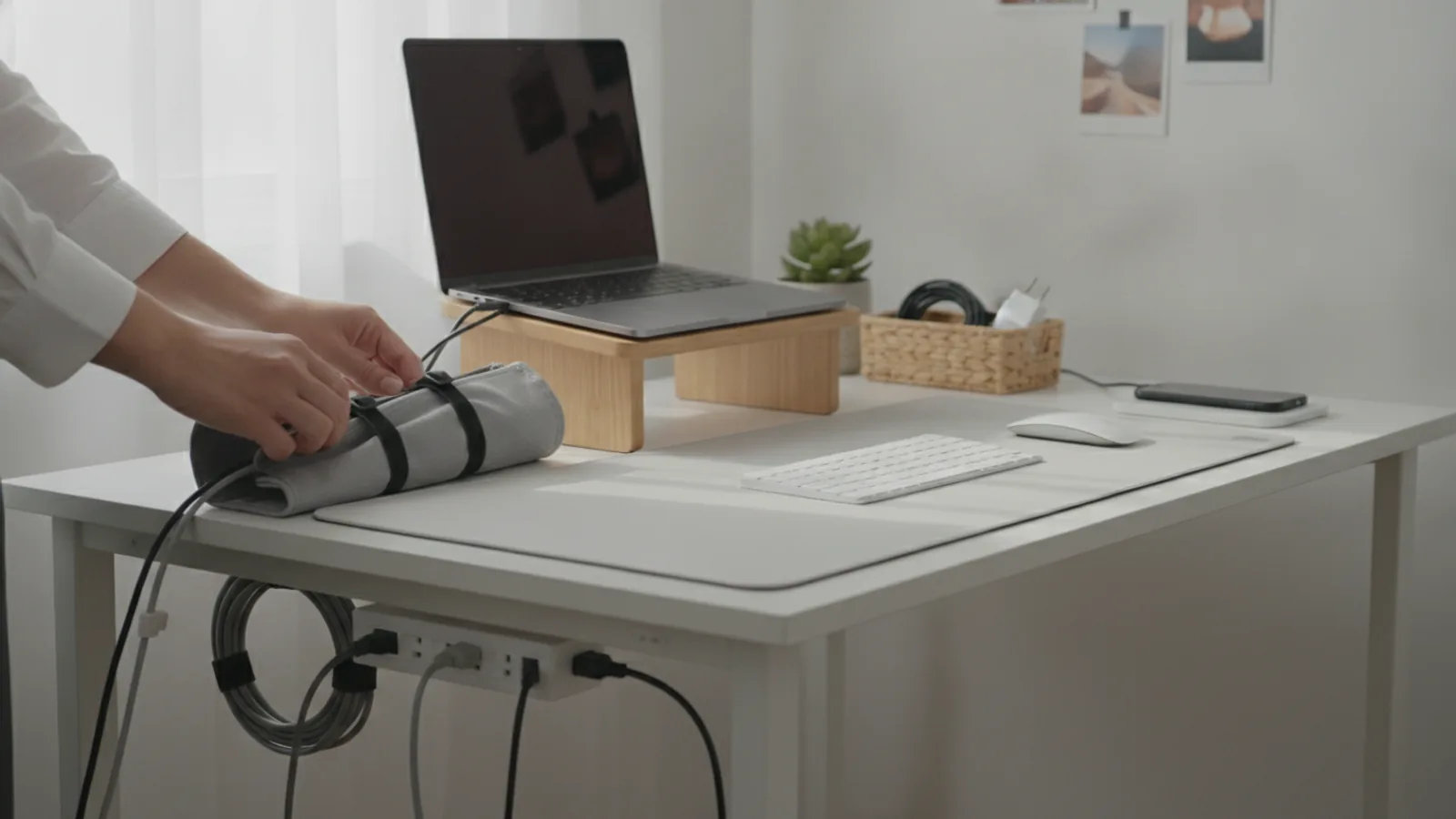
Before you plug anything in, arrange your cables so they are untangled and easy to reach. Use a cable organizer, a small pouch, or simply wrap each cable neatly with a velcro tie. Label each cable with the device it belongs to, using a small piece of tape or a colored tag. This saves time when you're in a hurry and prevents plugging the wrong cable into the wrong device. Also, consider the length of your cables: a shorter cable reduces clutter but may not reach an outlet. If you have a travel charger with a detachable AC cord, make sure you have that cord handy. When you have multiple devices, it's tempting to just grab any cable, but using the correct cable ensures optimal charging speed and prevents damage. An organized setup also reduces the risk of accidentally pulling a device off a table.
Plug Devices into the Appropriate Ports Strategically
Start by plugging in your most power-hungry device, such as a laptop, into the port with the highest output, typically the USB-C PD port labeled with a laptop icon or high wattage. Next, connect your phone and tablet to lower-power ports, but make sure the total draw doesn't exceed the charger's capacity. If your charger has smart power management, it will adjust automatically, but it's still wise to know which port is which. For instance, some chargers have a port that provides 15W, which is fine for a phone but not for a tablet that needs 30W. Plugging a high-demand device into a low-power port may result in slow charging or no charging at all. Also, check the order: if you plug in a high-draw device first, it sets the power allocation; adding a second high-draw device later may split power, slowing both. So, prioritize which device needs a full charge.
Monitor Charging Progress and Adjust as Needed
Once everything is plugged in, keep an eye on the charging status. Most devices show a charging icon or a percentage. Over the first few minutes, check if any device is not charging or charging slowly. If a device isn't charging, it might be because it's drawing more power than the port provides, or the cable is faulty. Try switching ports or changing the cable. Also, feel the charger and the cables: if they are unusually hot, that's a warning sign. Unplug the device that's causing the heat and let things cool down. Some chargers have LED indicators that show active ports; if one port's light is off, that port may not be working properly. Periodically, you can unplug a fully charged device to free up power for others. This active monitoring ensures your devices charge efficiently and prevents overloading.
Implement Safe Charging Habits While Traveling
Adopt a routine that ensures safety and longevity. First, avoid charging devices on soft surfaces like beds or couches, which can block airflow and cause overheating. Instead, place the charger on a hard, flat surface. Second, unplug the charger from the wall when it's not in use, especially during thunderstorms or when you're away from your accommodation. Third, do not use cheap, unbranded cables or adapters, as they may not have proper safety features. Fourth, if you're charging overnight, set a timer to unplug devices or use a charger with an auto-off function. Finally, periodically inspect your charger for any damage, frayed cables, or bent prongs. These habits not only protect your devices but also reduce the risk of electrical accidents. A good practice is to use the travel charger only for charging, not for powering other appliances, and to keep it dry.
Quick Reference
| Situation | Action | Why it helps |
|---|---|---|
| You have a laptop, phone, and tablet but only one outlet. | Plug the laptop into the highest-wattage USB-C port, then connect the phone and tablet to lower-power ports, ensuring the combined wattage does not exceed the charger's rating. | Prioritizing the laptop ensures it gets the power it needs, while the phone and tablet can share the remaining capacity without overloading the charger. |
| A device is charging very slowly or not at all on your travel charger. | Switch the device to a different port, ideally a USB-C port that supports fast charging, and also test with a different cable to rule out cable issues. | The port may not provide enough wattage, or the cable may be faulty, so changing both helps identify and fix the problem quickly. |
| You need to charge multiple devices overnight while you sleep. | Use a travel charger with a timer or smart charging feature, and place it on a hard surface away from flammable materials, then set a reminder to unplug in the morning. | Preventing overcharging and reducing fire risk is crucial when you are not actively monitoring the charging process. |
Common Issues
- The charger gets hot to the touch during use.: Unplug all devices immediately and let the charger cool down. Then, reduce the number of concurrently charging devices, and ensure the charger is in a ventilated area, not in a confined space like a bag.
- One port on the charger stops working.: Try a different cable and device to test the port. If it still doesn't work, check for debris or bent pins, and clean gently. If the port is damaged, stop using that port and consult the manufacturer's instructions.
- Devices charge slower than expected even though they are connected.: Verify that the charger's output matches the device's requirement, and that the cable supports the necessary wattage. Use a different cable that is known to handle fast charging, and ensure the device's fast charging feature is enabled in its settings.
Advanced Tips
- If your travel charger has two USB-C ports, you can charge a MacBook at 60W and an iPad at 20W simultaneously, but check the charger's power distribution table to confirm the exact split.
- For maximum efficiency, charge your highest-wattage device first for 30 minutes, then add secondary devices; this uses the charger's peak output when the first device is still drawing high power.
- Invest in a charger with GaN (gallium nitride) technology, which is smaller and generates less heat, allowing higher power output in a compact size.
Final Checklist
- Confirm your travel charger's total wattage is sufficient for all devices you'll charge at once.
- Pack the correct cables and adapters for each device, including USB-C and USB-A, and ensure they are in good condition.
- Identify the high-power port on your charger and plan which device goes into it first.
- Practice monitoring the charger's temperature and device charging status for the first 10 minutes.
FAQ
Can I charge a laptop and a phone at the same time with a 65W travel charger?
Yes, if your laptop requires around 45W and your phone needs around 18W, the total is 63W, which is under the 65W limit. However, check the charger's power distribution; some chargers split power as 45W and 18W, which works, but if the laptop needs 60W, the phone may not charge quickly. Always verify the charger's specs.
Is it safe to leave devices charging overnight on a travel charger?
It is generally safe if the charger is from a reputable brand and has overcharge protection, but it's better to avoid it. Charging overnight can degrade battery health over time. If you must, use a charger with a built-in timer or smart shutoff, and place it on a hard surface away from anything flammable.
What should I do if my travel charger gets warm during use?
Warmth is normal, but if it gets hot to the touch, unplug everything immediately. Allow the charger to cool, then check if you are drawing too much power. Reduce the number of devices charging at once, and ensure the charger is in a well-ventilated area. If it continues to overheat, stop using it and consider a higher-capacity charger.