How To Build A Lighter Laptop Setup For Working Between Home And A Shared Desk
A practical step-by-step guide to how to build a lighter laptop setup for working between home and a shared desk, including preparation, instructions, common issues, tips, and next steps.
How To Build A Lighter Laptop Setup For Working Between Home And A Shared Desk
This guide helps you create a lighter laptop setup for moving between home and a shared desk. You will learn how to choose a minimal set of gear, manage cables, protect your device, and set up a quick transition routine. The focus is on reducing physical load and mental clutter while keeping your work efficient. You will find practical steps, quick references, troubleshooting tips, and advanced advice to tailor your setup to your needs. Each section is designed to be actionable and easy to follow, so you can spend less time packing and more time working.
Fast Answer
- Start by listing your daily essentials: laptop, charger, a small mouse, and one cable for your phone or headphones. Leave everything else at home or at the desk.
- Use a lightweight bag with padded straps and a separate sleeve for your laptop. Keep your accessories in a small pouch so they don't get lost.
Before You Start
- Check your backpack or laptop bag: choose one with a dedicated padded compartment, water-resistant material, and comfortable shoulder straps. Try it on with your usual load to ensure it feels balanced and light.
- Gather your daily gear: laptop, charger, a compact mouse, a USB cable, and a small notebook. Keep these items in one easily accessible pouch to avoid digging through your bag.
- Review your shared desk: know what is already there, like a monitor, keyboard, or docking station. Make a list of what you must bring, such as adapters or a specific cable, and keep that list tucked in your bag.
- Set a launching spot near your door: put your packed bag there the night before. This simple habit reduces morning rushing and helps you remember essential items.
Step-by-Step Instructions
Identify Your Daily Carry Items
Start by emptying your current bag and laying every item on a table. Separate them into three groups: always needed, sometimes needed, and never used. For the always group, think about a typical workday: your laptop, its charger, a phone cable, and maybe a small mouse for comfort. Question every item in the sometimes group—do you really use a second charger or a notebook? Remove those you can borrow or do without. Then, for one week, pack only the always items. At the end of each day, jot down if you missed anything. This practice reveals your true essentials. The check matters because it forces you to break the habit of packing for worst-case scenarios. You will likely find that half of your bag was just emergency clutter. Keep the list visible near your bag to guide future packing, and update it as your routine changes.
Choose a Light, Supportive Bag
Your bag is the foundation of a light setup. Look for one that weighs under a kilogram when empty, has a padded shoulder strap or back panel, and is made of a water-resistant fabric. The interior should have a separate sleeve for your laptop—this protects it and prevents smaller items from pressing against the screen. Avoid bags with heavy metal zippers or thick extra pockets that add weight. Try the bag with your laptop inside: the weight should stay close to your back, not pull you backward. Walk around the store or your home for a few minutes to test comfort. This check matters because a poorly balanced bag can cause shoulder or back pain, and a flimsy sleeve risks damage to your device. If you already have a heavy bag, consider a lightweight inner sleeve for your laptop and carry that separately in a tote or paper bag. The goal is to keep total weight low, so reconsider every extra compartment.
Streamline Your Cables and Chargers
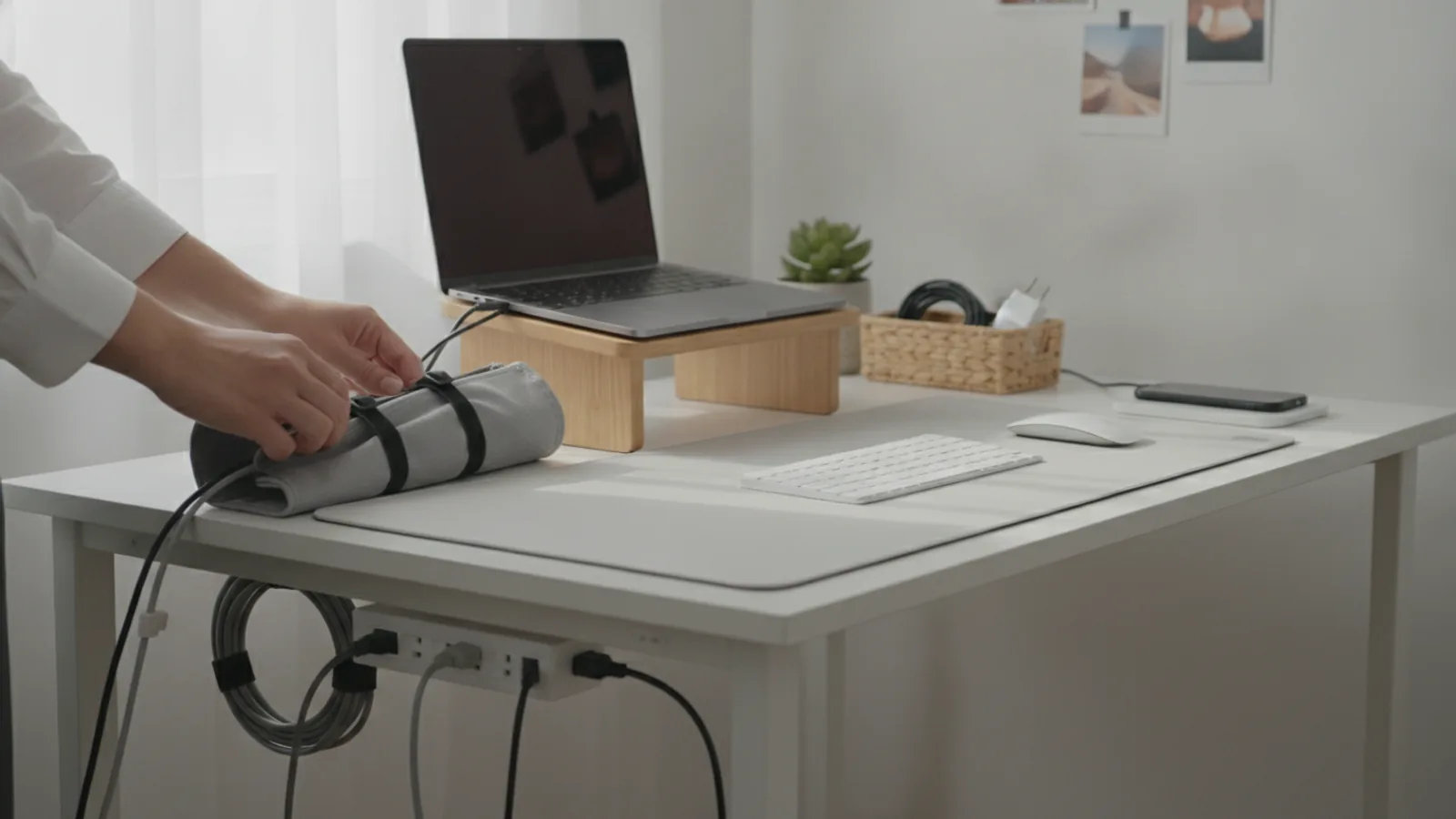
Cables are often the heaviest part of a tech kit. Gather all your charging wires and adapters, then sort them by what they actually charge. For a typical setup, you need one laptop charger, one USB-C cable for your phone and perhaps a small power bank. If you have multiple devices, consider using a single wall charger with two ports—it can power your laptop and phone from one outlet, saving weight. Wrap each cable neatly using a velcro tie or a simple rubber band, and place them in a small pouch. Coil them loosely to avoid damaging the wire. This check matters because tangled cables cause frustration and can wear out the connectors. Also, a multi-port charger reduces the number of bricks you carry. Test that every cable works before you pack, and label them with a tiny piece of tape if they look similar. After a few days, you will know exactly which cables you truly need.
Prepare Your Workspace Transition Ritual
A smooth transition between home and shared desk depends on a fast setup and pack-up routine. Spend a few minutes each day creating a ritual. When you arrive at the desk, unpack in a fixed order: first take out your laptop, then the power adapter, then your mouse and phone cable. Plug them into the same ports every time, if possible. When you leave, reverse the order: disconnect everything, put cables into your pouch, and slide the laptop into its sleeve. Keep a small checklist on your phone or in the pouch to ensure you never forget the adapter or your key card. This check matters because a routine reduces the chance of leaving something behind and shortens the time you spend fiddling with connections. Over time, you will develop muscle memory, so even a rushed morning feels smooth. If the shared desk has a monitor, practice using its buttons or switching inputs on day one.
Adopt a Minimal Peripherals Policy
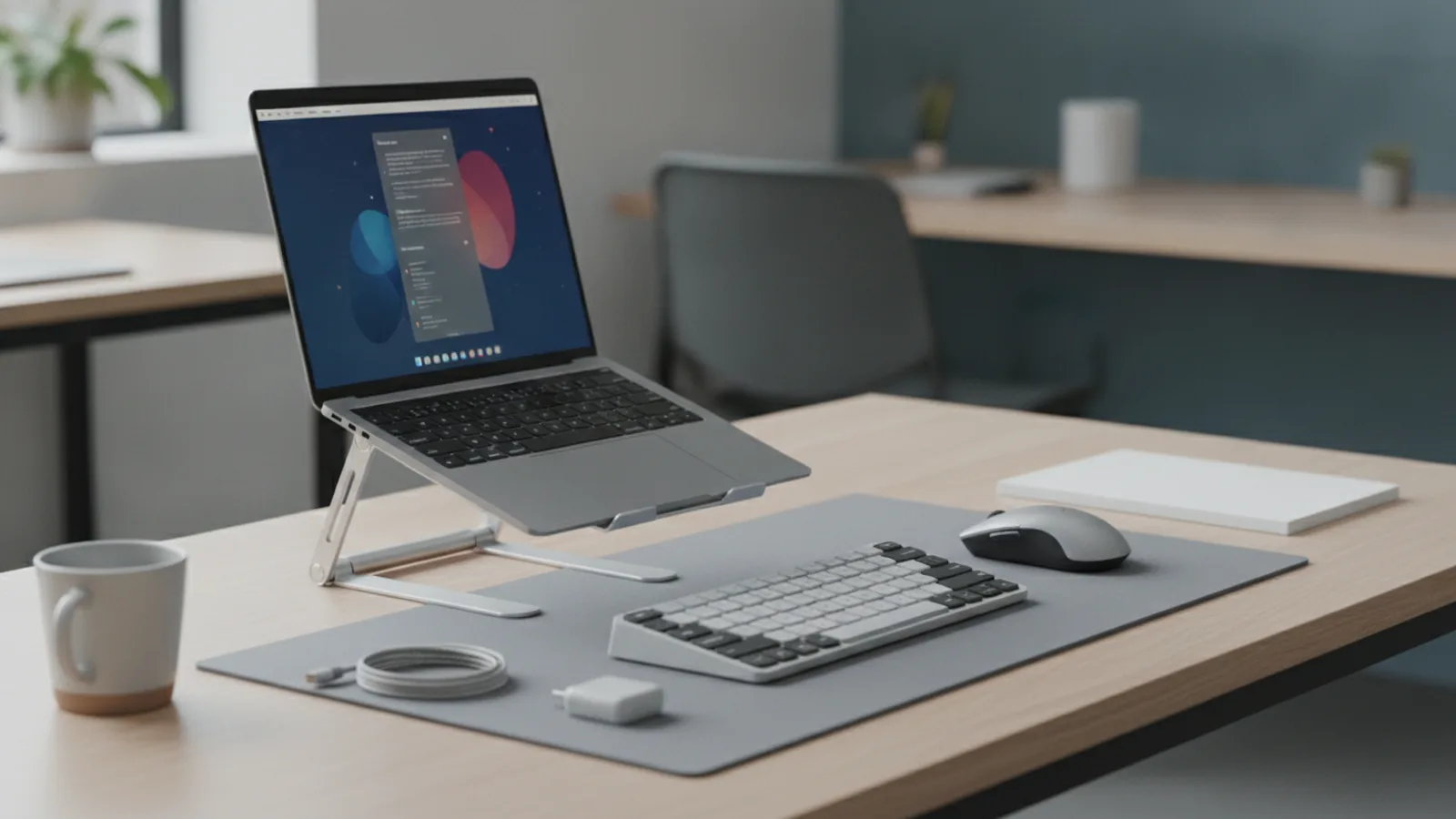
Peripherals like keyboards, mice, and stands add weight. First, decide if you really need them. Many laptops have a good keyboard and trackpad, so you might skip a separate mouse. If you prefer a mouse, choose a compact wireless one that runs on a single AA battery. For a stand, a simple foldable laptop stand can be light, but weigh the benefit against the load. Alternatively, use a stack of books at the shared desk to raise your screen. Test your posture without a stand: if your neck is comfortable, you can skip it. When you do bring peripherals, keep them in a small pouch with a dedicated slot. This policy matters because every extra item adds bulk and weight, and you have to remember to bring them home. Also, wireless devices need batteries—check they are charged or have a spare. If you are the only user, you can leave a mouse at the desk, but label it to avoid theft.
Develop a Daily Packing and Unpacking Reset
To stay light, you must reset your bag every evening. Take out everything, wipe the laptop, empty the pouch of crumbs, and return items to their proper spots. Charge all devices overnight, so you do not need to carry a backup battery. Place your packed bag by the door or in a designated spot. In the morning, do a quick mental checklist: laptop, charger, phone, keys, and anything specific to the day like a meeting note. This reset prevents the slow accumulation of junk. The check matters because we often leave a receipt or a snack in the bag that adds weight and clutter. A clean bag also makes you more likely to pack carefully. If you notice you have not used an item for two weeks, remove it permanently. This habit keeps your setup intentionally light and your mind focused. Over time, you will know exactly what is in your bag without even looking.
Quick Reference
| Situation | Action | Why it helps |
|---|---|---|
| You are heading to a meeting room and need a lighter setup. | Take only your laptop, a notepad, and a pen; leave the charger and mouse if the meeting is under two hours. | Meetings rarely need heavy peripherals, and reducing load makes you faster and less tired. |
| You realize you forgot your charger at the shared desk. | Use your phone's charger with a compatible adapter, or borrow a charger from a colleague, but first check if your laptop supports charging via USB-C. | Knowing alternative power sources prevents panic and downtime in a shared workspace. |
| Your bag feels unbalanced and pulls on one shoulder. | Repack heavier items like the charger and laptop toward the back center of the bag, closest to your spine. | Balanced weight reduces strain and prevents long-term shoulder or back issues. |
Common Issues
- You keep leaving your charger at home or at the office.: Keep a second charger permanently at the shared desk and one at home, so you never have to transport it. If that is not possible, use a label on the bag's main pocket as a reminder.
- Your laptop gets scratched in your bag despite light packing.: Place your laptop in a protective sleeve with a padded interior, even if your bag has a compartment. Ensure the sleeve fits snugly and use a cloth to clean the laptop before placing it inside.
- You feel tired because your backpack is heavy even though you pared down.: Weigh your bag on a kitchen scale and aim for under 3 kilograms. Remove redundant items like extra batteries, heavy books, or multiple chargers. Consider a roller bag if you have to carry more, but test its weight and size.
Advanced Tips
- Use cloud storage or a portable hard drive to access files from any device, so you do not have to carry a copy of every document.
- If your laptop is old and heavy, consider a lighter model, but first check that your employer can provide one or that you can afford it; lighter doesn’t always mean better.
- Master keyboard shortcuts and trackpad gestures to avoid needing a mouse, but practice them until they become automatic, saving you time and a usually bulky device.
Final Checklist
- Before bed, empty your bag and clean out any crumbs or litter.
- Confirm that your laptop, charger, and phone cable are charged and packed.
- Place your packed bag near the door or on a hook you always see.
- In the morning, do a three-second mental scan: laptop, charger, phone, keys.
FAQ
How can I avoid forgetting my laptop charger?
Keep a second charger at your shared desk and one at home. If that isn’t possible, attach a small carabiner to the charger and clip it to the handle of your bag. Alternatively, pack your charger at the same time as you put in your laptop, and never pack your laptop without your charger.
What if my shared desk doesn't have a monitor?
You don't need a monitor—your laptop screen is fine. But if you prefer a larger display, ask your workplace if one is available. In some setups, you can use a portable monitor, but that adds weight. Try a simple laptop stand to adjust the screen height for better posture.
Is it safe to carry a laptop without a briefcase?
Yes, as long as you use a padded sleeve and a bag with protective compartments. Make sure the laptop does not press against sharp objects. Also, be mindful of weather: rain or extreme heat can damage it, so choose a water-resistant bag and never leave it in a car in summer.