How To Choose A Simple Timer That Helps A Work Session Feel Lighter
A practical step-by-step guide to how to choose a simple timer that helps a work session feel lighter, including preparation, instructions, common issues, tips, and next steps.
How To Choose A Simple Timer That Helps A Work Session Feel Lighter
Choosing a simple timer for a work session can transform how you perceive time, making long tasks feel more manageable and less overwhelming. This guide walks you through the essential considerations: understanding your work style, selecting the right timer type (physical, digital, or app-based), setting effective session durations, and incorporating breaks. It also provides practical steps for implementation, troubleshooting common issues, and advanced tips for optimizing your focus and well-being. By the end, you'll have a personalized approach that makes your work sessions feel lighter and more productive, without needing complex technology or expensive gadgets.
Fast Answer
- Pick a timer that suits your task length and environment: for short bursts, use a simple kitchen timer; for longer focus periods, a digital countdown timer on your phone works well. Keep it visible but not distracting.
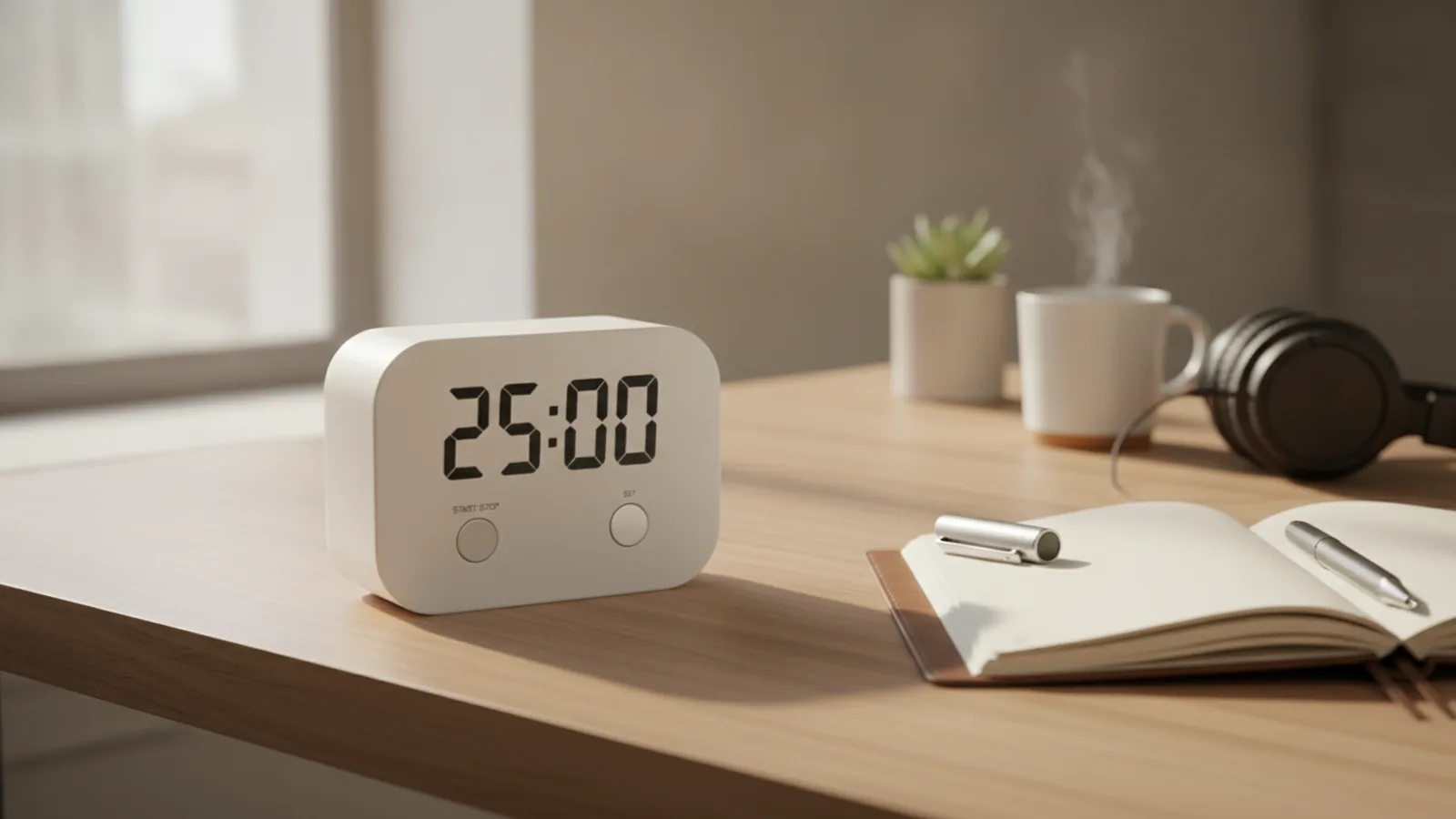
- Set your timer for a realistic work interval, like 25 minutes, followed by a 5-minute break. Adjust the lengths based on your personal focus patterns and the nature of your work.
Before You Start
- Reflect on your typical work session length and your natural attention span. Notice when you usually start to lose focus or feel fatigued, so you can choose a timer interval that fits your rhythm.
- Decide where you will place the timer: it should be visible at a glance but not in your direct line of sight to cause distraction. Consider a spot on your desk or wall.
- Choose the timer type based on your environment: if you're in a quiet space, a silent vibration timer might be best; if noise is acceptable, a simple beeping timer works. Avoid timers with loud alarms that could startle you.
- Consider the timer's ease of reset: you'll want a timer that is quick to set and restart, especially during a busy work session. Practice setting it once to ensure you can do it without fumbling.
Step-by-Step Instructions
Evaluate Your Work Task and Preferred Focus Length
Start by thinking about the type of work you most often do. Are you doing deep, analytical tasks that require long stretches of uninterrupted focus? Or are you doing shorter, more administrative tasks that can be broken into smaller chunks? Your task type will guide your timer interval. Next, consider your natural attention span. Do you find yourself checking your email every 10 minutes, or can you work for hours without a break? A simple way to gauge this is to work without a timer and notice when you feel the urge to stop or get distracted. That time is your natural focus limit. Once you have that number, choose a timer interval slightly shorter than your natural limit, so you can stay ahead of your fatigue. For instance, if you usually lose focus after 30 minutes, set your timer for 25 minutes. This creates a gentle challenge without feeling straining. Write down your preferred interval so you can refer to it when setting up your timer.
Decide Between a Physical Timer or a Digital App
Now that you know your interval, choose the timer hardware that fits your lifestyle. A physical timer, such as a kitchen timer that clicks and ticks, has the advantage of being tangible and separate from your devices. This can be ideal if you easily get drawn into your phone or computer when they are nearby. There is something satisfying about winding a mechanical timer. On the other hand, a digital timer on your phone or computer is highly customizable and can have soft, pleasant alarms. It also allows you to use the Pomodoro technique easily, with automatic cycles of work and break. However, ensure the app is simple and does not require login or sync. If you choose a phone app, place your phone face-down or in another room to avoid notifications. For physical timers, test the volume and tone before your session, so you know what to expect. Also, think about battery life: mechanical timers never need charging, but digital timers might. Choose the option that causes the least friction in your routine.
Set Up Your Timer for Your Chosen Focus and Break Durations
Now you are ready to set your timer. Start your work session by setting the timer for your focus interval, whatever you determined in step one. For most people, 25 minutes is a good starting point, but you may adjust to 30 or 20 minutes based on your energy. When you start the timer, commit to focusing solely on one task until the timer rings. If you finish early, use the remaining time to review your work or prepare for the next step. When the timer rings, stop work immediately. Do not be tempted to continue to a natural break; the timer is your boundary. Step away from your desk, stretch, take a few deep breaths, or get a drink. This break should be 5 minutes for a 25-minute focus interval. During the break, avoid checking email or social media; instead, do something unrelated. After the break, reset the timer for another focus session. If you find the long sessions exhausting, you can use a shorter interval, like 15 minutes, and work in several sessions. Consistency is key: use the same intervals for at least a week to see how they affect your concentration.
Place Your Timer in an Optimal Spot and Avoid Constant Checking
Your timer's location can significantly impact its effectiveness. Place it where you can see it with a glance, but not so close that you find yourself staring at it constantly. A common mistake is to watch the countdown, which defeats the purpose. If you use a phone app, put the phone on silent and face it down, or leave it in another room with a smartwatch or a physical timer to alert you. For a physical timer, place it across the room, so you hear the alarm but are not tempted to look. When you start a session, decide to focus on your work until you hear the alarm. If you feel the urge to check the timer, gently redirect your attention to the task. The timer is a tool to make you aware of time passing, not a source of anxiety. If you find yourself checking frequently, you might have set your interval too long; shorten it next time.
Incorporate Longer Breaks After Every Three to Four Sessions
Even with short breaks, your brain needs a longer rest after a few work intervals. A common pattern is to work for three 25-minute sessions with 5-minute breaks, then take a 15 to 30-minute break. This longer break allows your mind to consolidate information and recharge. For example, after completing three sessions, you could take a walk, have a snack, or do a non-work-related activity. Plan these longer breaks as part of your session, and set a separate timer for them if needed. During the long break, avoid anything that mentally stimulating; let your brain idle. This will help you return to work with renewed energy. If you are in a challenging project, you might adjust the number of sessions before a long break, but always have a rest period. The key is to listen to your body's signals and adjust. This pattern mimics the Pomodoro technique but is flexible to your needs.
Review and Adjust Your Timer Strategy Based on Feedback
After using your chosen timer for a few days, evaluate how it feels. Do you feel less stressed and more productive? Or does the timer feel like a chore? Check your focus: are you completing tasks more efficiently? Are you experiencing less interruption? Use your own experience as feedback. If you find the current interval too long, shorten it. If too short, lengthen it. Also, consider the alarm sound: if it startles you, change it to a gentler sound. If you miss alarms often, place the timer closer or increase volume. The goal is to make the timer a seamless part of your routine. Remember that the timer is not a strict rule but a helpful guide. You might occasionally work past the timer if you are in a flow, but be careful not to skip your breaks. After a week, you will have a personalized timer system that works for you. Keep notes in a journal to track what works.
Quick Reference
| Situation | Action | Why it helps |
|---|---|---|
| You are starting a new task and need to know how long to set the timer. | Use a standard 25-minute focus interval for most tasks. If the task is routine, use 20 minutes; if it is complex and engaging, use 30 minutes. | Standardized intervals help build a rhythm and avoid decision fatigue, while slight adjustments match the task's demand. |
| You are in a distracting environment and need to ensure you hear the alarm. | Place the timer closer to you, increase its volume, or use a visual indicator like a flashing light. Also, consider wearing earphones that vibrate. | Ensuring you hear the timer prevents overrunning the session and missing your break, which is essential for maintaining energy. |
| You find yourself constantly looking at the timer during a work session. | Move the timer out of your direct line of sight, for instance, place it behind your monitor or on a shelf. Alternatively, use a timer that only sounds at the end. | Constant monitoring disrupts concentration, so placing it out of view helps you focus on the task and rely on the alarm. |
Common Issues
- You frequently ignore the timer's alarm because you are so engrossed in your work.: Place the timer in a location that requires you to stand up to turn it off, or use an app that continues to sound repeatedly until you acknowledge it. Also, remind yourself that the break is beneficial and helps sustain long-term focus. If you tend to ignore, set a secondary alarm a few minutes later.
- You feel anxious or pressured when the timer is ticking, which reduces your productivity.: Change the timer to a silent mode with a subtle vibration or a gentle sound. Train yourself to see the timer as a calming guide, not a strict judge. Start with a longer interval, like 50 minutes, so you feel less pressured, or use a timer that shows a relaxing visual, like a gradually growing flower.
- The timer alarm is too loud or startling, causing an adrenaline spike and ruining your concentration at the break.: Swap to a timer with a softer, more melodic alarm. Many digital timers allow you to select a tone. Test different sounds until you find one that is pleasant and noticeable. Alternatively, use a physical timer that clicks quietly and gently rings.
Advanced Tips
- Use a timer as a focus re-center: every time the timer rings, take a deep breath and consciously refocus on your priority task, even if you are in a break.
- Experiment with different intervals, such as 10-minute sessions for small tasks, to build momentum and avoid procrastination on overwhelming projects.
- Combine the timer with a checklist: for each interval, write down one specific task to accomplish. This creates a sense of forward progress and satisfaction.
Final Checklist
- Identify a focus interval length that suits your attention span, such as 25 minutes, and set it on your chosen timer.
- Place the timer in a spot where you can hear it but not be tempted to watch, using a silent mode if necessary.
- Establish a consistent break routine, including a short 5-minute break every session and a longer 15–30 minute break after three or four sessions.
- Review your experience after a week and adjust the interval or timer type for optimal comfort and productivity.
FAQ
Why is using a timer helpful for work sessions?
A timer breaks work into manageable chunks, reducing the feeling of monotony and preventing fatigue. It also creates a sense of urgency that helps you focus, while the breaks allow your brain to rest and consolidate information. Research suggests that the brain works best in short bursts, and a timer capitalizes on that pattern.
What if I find the timer interval too short or too long?
You can adjust the interval to suit your preferences. If you often find yourself wanting to stop before the timer ends, try a shorter interval, like 15 minutes. If you feel like you’re just getting into a flow when the alarm sounds, increase to 30 or 45 minutes. The key is to experiment and find what feels sustainable and productive without causing stress.
Can I use my phone's timer application effectively?
Yes, many phone timers work well, but be sure to put your phone in 'Do Not Disturb' or silent mode to avoid notifications. Place the phone face-down or in another room to minimize distraction. Alternatively, you can use a simple website or desktop app, but the principle remains: keep the timer visible enough to remind you, but not so prominent that it tempts you to check the time constantly.