How To Create One Charging Spot For A Shared Household
A practical step-by-step guide to how to create one charging spot for a shared household, including preparation, instructions, common issues, tips, and next steps.
How To Create One Charging Spot For A Shared Household
Creating one dedicated charging spot for a shared household prevents cable clutter, reduces arguments over who unplugged whom, and keeps devices organized. This guide walks you through choosing a location, setting up the power source, organizing cables, labeling ports, and establishing simple household rules so everyone can charge safely and find their device easily.
Fast Answer
- Pick a central, dry location near an outlet, clear a flat surface, and set up a power strip with surge protection.
- Label each cable or port with the owner's name, use short cables to reduce mess, and agree on a simple rule like 'unplug only your own device'.
Before You Start
- Select a spot that is dry, away from water sources, and has good air flow to prevent overheating.
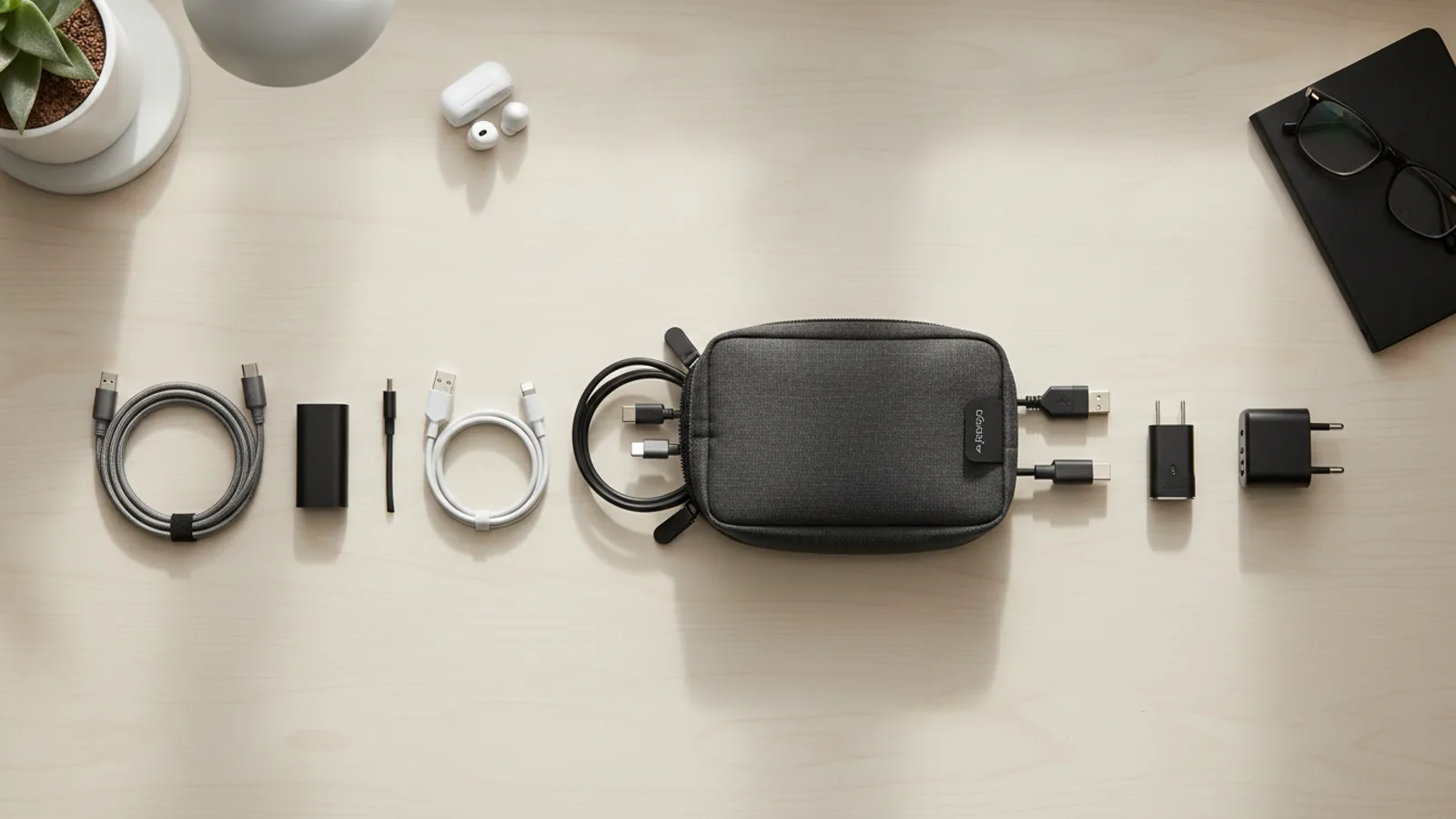
- Gather a power strip with surge protection, cable clips or ties, labels or tape, and a marker.
- Measure the available surface area to ensure it can hold all devices that need charging at once.
- Talk to household members about how many devices they typically charge overnight so you plan enough ports.
Step-by-Step Instructions
Choose the Right Location
Walk through your home and pick a spot that is central, dry, and has at least one wall outlet nearby. A hallway table, a corner of the kitchen counter, or a dedicated shelf in a common room works well. Make sure the surface is flat and sturdy enough to hold multiple devices without wobbling. Avoid places near sinks, bathtubs, or windows where rain might come in. Also, check that the location is not in a high-traffic walkway where people might trip over cables. Practical check: place your hand on the surface for ten seconds; it should not feel damp or unusually warm. This matters because a stable, dry surface reduces the risk of short circuits or devices slipping off and breaking.
Set Up the Power Source
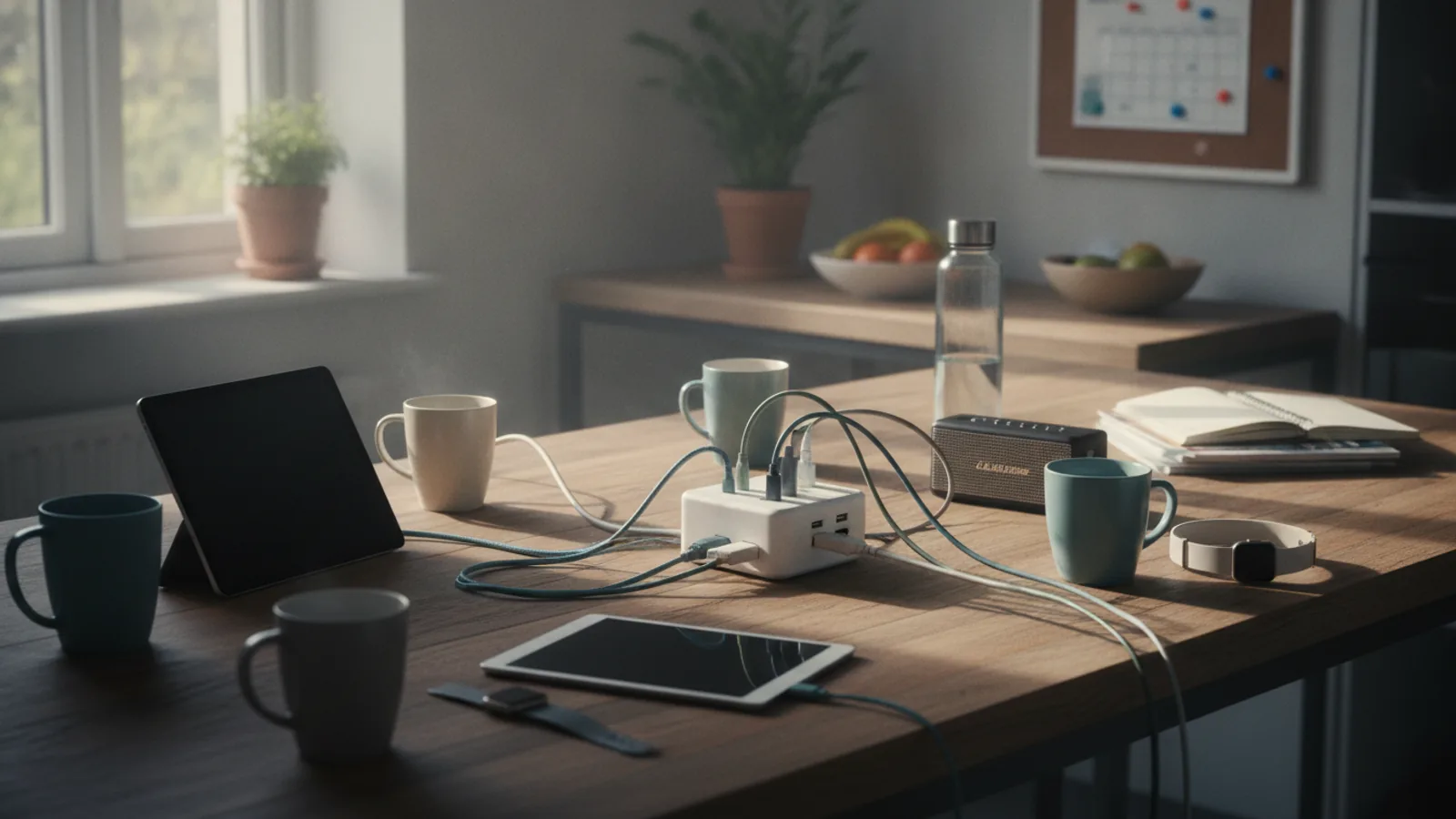
Plug a power strip with surge protection directly into the wall outlet, not into another power strip. Make sure the power strip has enough outlets for the number of devices you expect to charge at once. Position the power strip so its switch is easily reachable, and route the main cable along the edge of the surface using clips or ties to keep it out of the way. Then, plug in your chargers and adapters, leaving a little space between each one to prevent overheating. Practical check: after everything is plugged in, press the power strip's reset button (if it has one) and confirm the indicator light comes on. This matters because surge protection helps safeguard your devices from voltage spikes, and avoiding daisy-chains prevents overloading the circuit.
Organize Cables and Shorten Slack
Examine each charger's cable length and decide if it’s longer than needed. Longer cables tend to tangle, so consider using cable ties or velcro straps to bundle the excess neatly. If possible, use shorter cables or a retractable design. Run each cable from the power strip to where the device will rest, using clips to secure it along the surface or the back of the furniture. Keep all cables separate so they do not cross over each other. Practical check: gently pull each cable to see if it moves freely without pulling the plug out of the power strip or causing another cable to dislodge. This matters because organized cables not only look better but also reduce strain on the connectors, prolonging the life of both the cable and the device port.
Label Each Charging Port
Use a label maker, adhesive labels, or painter's tape and a marker to write each household member's name or the device type on the corresponding part of the power strip or the cable near the plug. Even if you use color-coding, a clear written label helps if colors fade or someone is colorblind. Place the label where it is easy to read without moving the device. For example, put a small flag of tape around the cable right at the power strip. Practical check: have each person come to the spot and find their own labeled cable without asking for help. This matters because clear labeling prevents accidental unplugging of someone else's device during a charge, which is a common source of household friction.
Establish Simple Household Rules
Gather all household members and agree on a few straightforward rules for using the charging spot. For example, 'Unplug only your own device', 'If the spot is full, use the backup outlet in the kitchen', and 'Leave space for others to plug in'. Write these rules on a small sign and post it near the charging area. Also, decide what happens if someone needs to unplug a device in an emergency—perhaps they should ask first, but if it's urgent, they can unplug and inform the owner later. Practical check: role-play a scenario where one person needs to charge and the spot is full; confirm everyone knows the backup plan. This matters because clear agreements prevent arguments and ensure everyone has fair access to the charging resource.
Maintain the Charging Spot Weekly
Set a recurring reminder on your phone to inspect the charging spot every Sunday. Check that all cables are in good condition—no frays, kinks, or exposed wires. Wipe down the surface with a slightly damp cloth to remove dust and grit, especially around the power strip vents. Re-tighten any loose cable clips and replace any labels that have become illegible. Also, verify that no new devices have been added that might exceed the power strip's capacity. If you have a power strip with a status light, confirm it still lights up properly. Practical check: unplug each device and replug it to ensure the connection is strong and not loose. This matters because regular maintenance catches wear before it becomes a fire hazard or a cause of intermittent charging failures.
Quick Reference
| Situation | Action | Why it helps |
|---|---|---|
| You come to the charging spot and all ports are occupied. | Check the kitchen or hallway for the backup outlet that was agreed upon in your household rules, and plug in there. | Using a pre-designated backup outlet avoids the need to unplug someone else's device, which preserves goodwill and keeps every device charging. |
| You accidentally pull out someone else's cable from the power strip. | Replug the cable immediately into the same port, then tell the device owner what happened and apologize. | Quickly restoring the connection minimizes the chance that they miss an important notification, and honest communication prevents trust issues. |
| The charging spot looks messy with cables everywhere. | Take five minutes to coil and tie loose cables with the provided cable ties, and move any devices that are fully charged to a separate 'done' area. | Tidying up reduces tangling and accidental disconnections, making it easier for everyone to see which ports are free and use them correctly. |
Common Issues
- Devices are not charging when plugged into the power strip.: First, check if the power strip's switch is on and the reset button has not tripped. Then, try a different port on the same strip, and also test the device with the original wall outlet to see if the strip has failed.
- The charging spot is always cluttered and hard to use.: Install a small shelf or tray above the surface to hold idle devices and chargers, and use cable clips to route each cable individually. Set a weekly cleanup rule where each person takes their fully charged devices away promptly.
- People keep accidentally unplugging each other's devices.: Clearly label each cable and port with the owner's name, and enforce the rule that you only unplug your own device. If the issue persists, consider using a power strip with individual switches for each port, so people can turn off a port without pulling the plug.
Advanced Tips
- Install a wall-mounted charging station with individual USB ports and short built-in cables to eliminate loose wires entirely.
- Use a smart power strip with timers or occupancy sensors so that idle ports automatically cut power, reducing standby energy use.
- If your household has many devices, consider designating one person as the 'charging spot manager' to oversee maintenance and resolve conflicts.
Final Checklist
- Choose a dry, stable surface near an outlet and clear it of any clutter.
- Plug in a surge-protected power strip directly into the wall, not another strip.
- Label every cable and port with a clear owner or device name.
- Agree on and post simple usage rules, and set a weekly cleanup reminder.
FAQ
What should I do if I have more devices than ports in the charging spot?
Use a power strip with more outlets, or create a second charging spot in another room. Alternatively, implement a rotation schedule where each person takes turns charging overnight. You can also encourage the use of a single multi-device charger for some devices if your devices support it, but be sure to check each device's requirements manually.
Is it safe to leave devices charging overnight in the shared spot?
It can be safe as long as you are using a good-quality power strip with surge protection, the area is well-ventilated and away from water, and you know that your devices' batteries stop charging when full. Check the surface for heat occasionally, and inspect cables for damage weekly. If you have any doubts, unplug before sleeping or use a timer to cut power automatically.
How can I prevent cable clutter from building up again?
Incorporate cable management into your weekly maintenance routine. Use short cables, tie up excess length, and route cables along the back of the furniture. Encourage everyone to use the designated labels and to wrap their cables when they take their device away. If you find it recurring, consider investing in a cable box or a wall-mounted organizer.