How To Organise A Compact Day Bag For An All Day City Walk
A practical step-by-step guide to how to organise a compact day bag for an all-day city walk, including preparation, instructions, common issues, tips, and next steps.
How To Organise A Compact Day Bag For An All Day City Walk
A compact day bag for an all-day city walk should carry only what keeps you comfortable, safe, and ready for small changes in weather or plans. The goal is light weight, quick access, and a place for every item so you are not searching while standing on a busy pavement. Build the bag in layers, test it on a short walk, and adjust after each trip.
Fast Answer
- Pack for a full day of walking, not for every possible emergency, and keep the total weight low enough that you can carry it for several hours without strain.
- Use three zones: a body-side pocket for valuables, a main compartment for bulky comfort items, and a quick-access top area for water, a map, and a small snack.
Before You Start
- Choose a bag that sits close to your back or side, has a wide strap, and does not bounce when you walk at a normal pace.
- Lay out every item on a table and remove anything you have not used on a similar day trip in the past year.
- Check the weather outlook and the route length, then decide whether you need a light rain layer, a warm layer, or both.
- Test the loaded bag with a ten-minute walk around your home before you leave for the day.
Step-by-Step Instructions
Start With The Bag And Strap Fit
Begin by adjusting the bag itself before you put anything inside. Put the empty bag on and tighten the main strap so the bag rests high on your back or snug against your side, not swinging at hip level. The padded part of the strap should sit on the strong part of your shoulder, and any waist or chest strap should lie flat, not twist. Walk twenty steps and check that the bag does not slide when you turn your head or reach forward. If it moves, shorten the strap by one notch and test again. A well-fitted bag spreads weight and reduces shoulder ache later in the day. Do this check first because every later packing decision depends on how the bag carries weight. When the fit is right, note the strap setting so you can repeat it quickly on future walks.
Build The Body-Side Valuables Zone
Place the items you must keep close into the pocket that rests against your body or in a zipped inner section. This usually includes a small wallet, a card or key, and a phone if you carry one. Put them in a single pouch rather than loose, so you can feel that the pouch is present with one touch. Close the zip fully and give the pocket a gentle shake to confirm nothing slips out. This zone should be flat and thin, because bulky items here press into your back and become uncomfortable. The reason for this order is simple: if you pack valuables last, they often end up in an outer pocket where they are harder to watch. After the pouch is in place, tuck the strap of the bag over it so the pouch cannot fall out if the zip is accidentally left open.
Add Water And A Snack To The Top Zone
Fill a reusable bottle and place it upright in the top or side area where you can reach it without taking the bag off. A bottle that lies flat can leak, so stand it up and check the lid is tight before the bag goes on your back. Add one or two small snacks that do not crumble easily, such as a cereal bar or a piece of fruit, and put them beside the bottle. This top zone is for items you will use during the walk, so keep it small and keep it reachable. Carrying water and a snack here means you drink and eat before you feel drained, which helps you keep a steady pace. Check the weight of this zone with one hand; if it feels heavy, use a smaller bottle rather than removing the snack, because both serve a purpose on a long walk.
Pack A Light Weather And Comfort Layer
Fold one thin layer that suits the day, such as a light rain jacket or a compact warm top, and place it at the bottom or back of the main compartment. Fold it flat rather than rolling it tight, because a flat layer sits better against your back and leaves room above it. Add a small cloth or tissue pack and a basic first-aid item such as a plaster, then close the main compartment. This layer is your backup for a change in wind, shade, or a brief shower, so it should be easy to pull out but not so bulky that it fills the bag. Press the bag gently against your back to feel whether the layer creates a hard lump; if it does, refold it or move it to the outer part of the main section. Comfort matters because an uneven load causes you to shift your posture and tire sooner.
Organise Small Tools And Papers
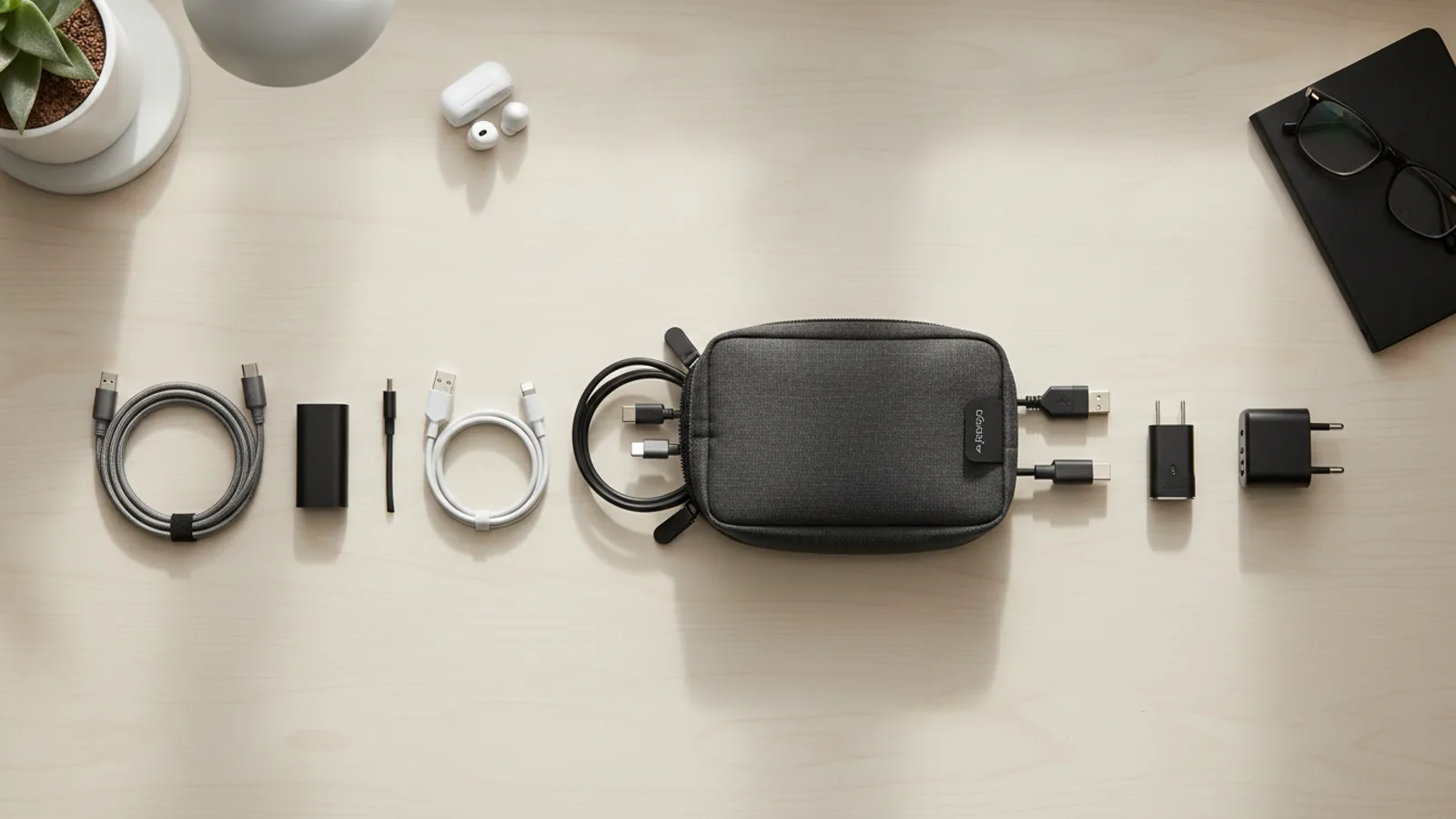
Collect the small items you may need during the day, such as a folded route map, a pen, a charger cable, and a compact umbrella if rain is likely. Group them in one small pouch or a zipped section so they do not scatter through the bag. Put papers and the map in a flat pocket where they will not crease, and keep the pen with them. Check that each item has a home and that you can name that home without opening the bag. The practical check is to close your eyes, touch the outside of the bag, and point to where each group sits; if you cannot, rearrange until the layout is clear. This matters because searching for a small item while standing on a busy street is both slow and distracting. A clear layout also helps you repack quickly after a stop.
Test, Adjust, And Set A Final Rule
Put the loaded bag on and walk around your home or a nearby block for at least ten minutes. Notice where the weight presses, whether the bag bounces, and whether any item digs into your back. Stop and remove the item that causes the most trouble, then walk again. Repeat once more if needed. After the walk, set a simple rule for the day: one water bottle, one snack, one layer, one small pouch of tools, and the valuables pouch. This rule keeps the bag compact and prevents last-minute additions from making it heavy. The final check is to lift the bag with one hand and confirm it feels manageable for the length of your planned route. A bag you can carry comfortably all day is more useful than a bag holding items you never touch.
Quick Reference
| Situation | Action | Why it helps |
|---|---|---|
| You feel a light ache in one shoulder after an hour of walking. | Stop in a safe spot, loosen the strap, shift the bag to the other shoulder, and move the heaviest item to the bottom of the main compartment so the load sits lower and closer to your back. | Moving weight lower and closer to your centre reduces the pull on one shoulder and helps you keep a steady, comfortable pace for the rest of the walk. |
| The sky darkens and a brief shower begins while you are far from shelter. | Step under a doorway or tree, open the main compartment, pull out your folded rain layer, and put it on before the bag gets wet; then cover the bag with the layer or tuck it under your arm. | Acting before you are soaked keeps your body temperature steady and protects the items inside, so you can continue without a long stop or a change of plans. |
| You cannot remember where you placed your route map or pen. | Pause away from the path of other walkers, open only the flat pocket or small pouch you set aside for papers and tools, and return each item to that same home after use. | A fixed home for small items means you never empty the whole bag on a pavement, which saves time and keeps your valuables and papers out of public view. |
Common Issues
- The bag feels far heavier than expected after the first hour.: Empty the bag on a clean surface, remove any item you have not used, and repack with the heaviest items low and close to your back. If it still feels heavy, replace a large water bottle with a smaller one and carry only one layer instead of two.
- Small items slide to the bottom and are hard to find.: Group loose items into one or two small pouches with distinct shapes or colours. Keep papers in a flat pocket and tools in a zipped section, then check by touch that each group has a clear place before you close the bag.
- The bag bounces or twists while you walk quickly.: Shorten the main strap by one notch so the bag sits higher, and fasten any chest or waist strap so it lies flat. Walk a short distance to test the change, then adjust once more if the bag still moves against your back.
Advanced Tips
- Weigh your packed bag on a kitchen scale before a long walk and aim to keep it light enough that you can lift it with two fingers for a few seconds.
- Use a thin folded cloth as a divider between hard items and your back so edges do not press into you during the day.
- Refill your water bottle at public drinking points rather than carrying a full large bottle from the start, which keeps the early part of the walk lighter.
Final Checklist
- Bag sits high and snug, straps are even, and the load does not bounce during a short test walk.
- Valuables are in a body-side pouch that closes fully and can be checked with one touch.
- Water bottle stands upright in the top zone, and one or two snacks sit beside it.
- One weather layer, one small tool pouch, and a flat pocket for papers are all in place with clear homes.
FAQ
How much should a day bag weigh?
There is no single number that suits everyone, because body size, route length, and climate all matter. A useful check is to lift the bag with one hand and confirm you can carry it for the full length of your walk without needing to shift it constantly. If your shoulder aches within the first hour, the bag is too heavy for you that day. Remove one bulky item, use a smaller water bottle, or leave the second layer at home, then test the new weight with a short walk before you set out.
Should I pack for rain even on a clear day?
A thin rain layer earns its place in most city bags because weather can change while you are away from shelter, and a compact layer adds little weight. Check the local outlook before you leave, then decide based on the season and the length of your route. If rain is unlikely, a light folded layer still helps in wind or shade. If rain is likely, choose a layer that covers your bag as well as your body, and practise putting it on quickly so you do not have to unpack everything at the first drop.
How do I keep small items secure without carrying a large wallet?
Use one small pouch for a card, a key, and a phone, and keep it in the body-side pocket rather than an outer section. Close the zip fully and touch the pocket to confirm the pouch is present before you set off and after each stop. A slim pouch is easier to watch than a large wallet and leaves more room for comfort items. Keep a written note of emergency contacts in the same pouch, and avoid placing valuables in a pocket you cannot feel with one hand while the bag is on your back.